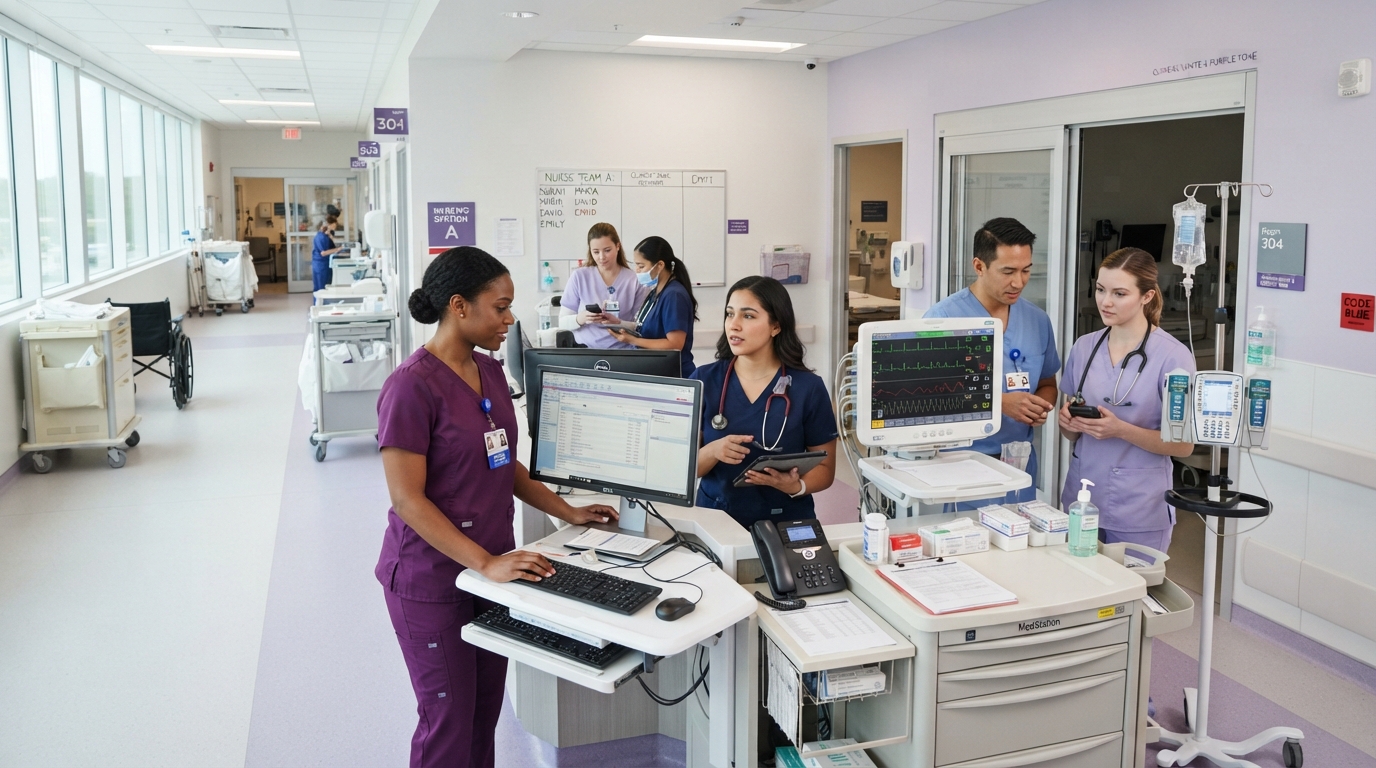
PCU / Telemetry Unit
The bridge between the floor and the ICU
A progressive care unit, often called a PCU or step-down unit, occupies the clinical space between a standard medical-surgical floor and an intensive care unit. The patients here are too acute for the floor but stable enough that they do not need the one-to-two ratio of an ICU. Many are on cardiac drips — heparin, amiodarone, nitroglycerin, or vasoactive medications that require continuous monitoring and titration. Telemetry is the backbone of the unit: every patient is on a cardiac monitor, and the nurse is responsible for recognizing rhythm changes, interpreting strips, and escalating when a patient's status shifts.
Nurse-to-Patient Ratio
Typically 1:3 to 1:4, reflecting the monitoring demands and drip management required for each patient.
Note: Nurse-to-patient ratios are governed by individual state regulations or by the hospital's own staffing model — there is no single national standard. Some units also elect a team-based approach that incorporates LPNs/LVNs and CNAs to extend care delivery. The ratios and staffing model described here are illustrative and for demonstration only; actual assignments vary by facility, acuity, and location.
Key Credentials
What Is a PCU / Telemetry Unit?
A PCU or telemetry unit is a step-down inpatient floor that provides continuous cardiac monitoring and a higher level of nursing care than a standard med/surg unit, but not the intensity of an ICU. Patients are typically admitted from the ICU as they improve, from the emergency department when they need monitoring but not critical care, or from the cath lab following a procedure. The unit runs on telemetry — continuous electrocardiographic monitoring — and nurses here are expected to be competent in rhythm interpretation, drip titration, and rapid response to clinical deterioration. The PCCN (Progressive Care Certified Nurse) credential is the recognized standard for this environment.
The Patient Population
Patients with acute cardiac conditions — unstable angina, post-MI recovery, arrhythmias like atrial fibrillation with rapid ventricular response, heart failure exacerbations on drip therapy, and post-catheterization patients. The unit also receives step-down patients from the ICU — someone who was intubated for respiratory failure and is now extubated but still needs close monitoring, or a sepsis patient who has stabilized but remains on pressors at a low dose. Post-operative cardiac and vascular surgery patients often spend time here as well.
The Nurse's Role
The PCU RN manages a patient load of three to four patients, each on continuous telemetry monitoring. The role centers on rhythm interpretation and documentation, titration of vasoactive and antiarrhythmic drips within prescribed parameters, frequent assessment of hemodynamic status, and rapid response to clinical changes. PCU nurses perform more invasive monitoring than floor nurses — arterial lines, central venous pressure monitoring, and sometimes continuous cardiac output — and they are the unit most likely to initiate a rapid response or transfer to the ICU when a patient deteriorates. The work is fast-paced and intellectually demanding, requiring constant synthesis of monitoring data with bedside assessment.
Skills Required
Advanced cardiac rhythm interpretation and strip documentation
Titration of vasoactive, antiarrhythmic, and anticoagulant drips
Hemodynamic monitoring — arterial lines, central venous pressure
Early recognition of clinical deterioration and rapid escalation
Post-ICU step-down management and ventilator weaning support
12-lead ECG interpretation and arrhythmia management
The Real Challenges
The PCU is a unit where the margin for error is thin. A patient on a heparin drip needs frequent partial thromboplastin time checks and dose adjustments. A patient in atrial fibrillation with a rapid ventricular response may need rate control medication titrated to effect. The telemetry monitor at the central station is constantly alerting — some alarms are meaningful, many are not, and the nurse has to develop the judgment to distinguish between them quickly. Alarm fatigue is a documented patient safety risk on these units. The cognitive load of managing three or four acutely ill patients on continuous monitoring, each with their own drip regimen and clinical trajectory, is substantial.
Why This Unit Matters
Progressive care units are the safety valve of the hospital. They keep ICU beds available for the most critical patients by providing a safe step-down destination, and they prevent floor patients from deteriorating into emergencies by catching changes early through continuous monitoring. A well-run PCU with competent, PCCN-credentialed nurses reduces ICU admissions, shortens hospital stays, and prevents the kind of sudden, unmonitored deterioration that leads to codes and poor outcomes. The unit is also a primary training ground for nurses who aspire to move into critical care.
Frequently Asked Questions
What is a PCU or telemetry unit?
A PCU (Progressive Care Unit), also called a step-down or telemetry unit, is an inpatient floor that provides continuous cardiac monitoring and a higher level of care than a med/surg floor but not full ICU intensity. It cares for patients on cardiac drips, post-ICU step-down patients, and those needing close rhythm monitoring.
What is the difference between PCU and ICU?
A PCU is a step-down unit for patients who are too acute for a standard floor but stable enough not to need ICU-level care. PCU nurses typically manage three to four patients on telemetry monitoring, while ICU nurses manage one to two patients on more invasive monitoring and life support. PCU serves as the bridge between the two.
What does PCCN stand for?
PCCN stands for Progressive Care Certified Nurse. It is the nationally recognized credential for nurses working in progressive care, step-down, and telemetry units, administered by the American Association of Critical-Care Nurses. It validates competency in monitoring and caring for acutely ill adult patients.
Hiring for a PCU / Tele Unit?
We connect facilities with experienced floor nurses whose backgrounds align with pcu / telemetry unit staffing needs. Start a confidential conversation about your opening today.
The clinical information on this page is provided for general educational purposes only and reflects common practices across U.S. inpatient settings. It is not medical advice, a clinical standard, or a guarantee of any specific staffing model, patient outcome, or credentialing requirement. Nurse-to-patient ratios, scope of practice, required certifications, and unit protocols vary by facility, state law, and accrediting body. Medical Floor Recruiter is an independent recruitment facilitator that refers qualified candidates to client facilities; we do not employ, supervise, or direct the clinical care delivered by placed professionals. Final credentialing, licensure verification, and clinical competency determinations are the sole responsibility of the hiring facility.