Observation Unit
Short-stay care for the rule-out patient
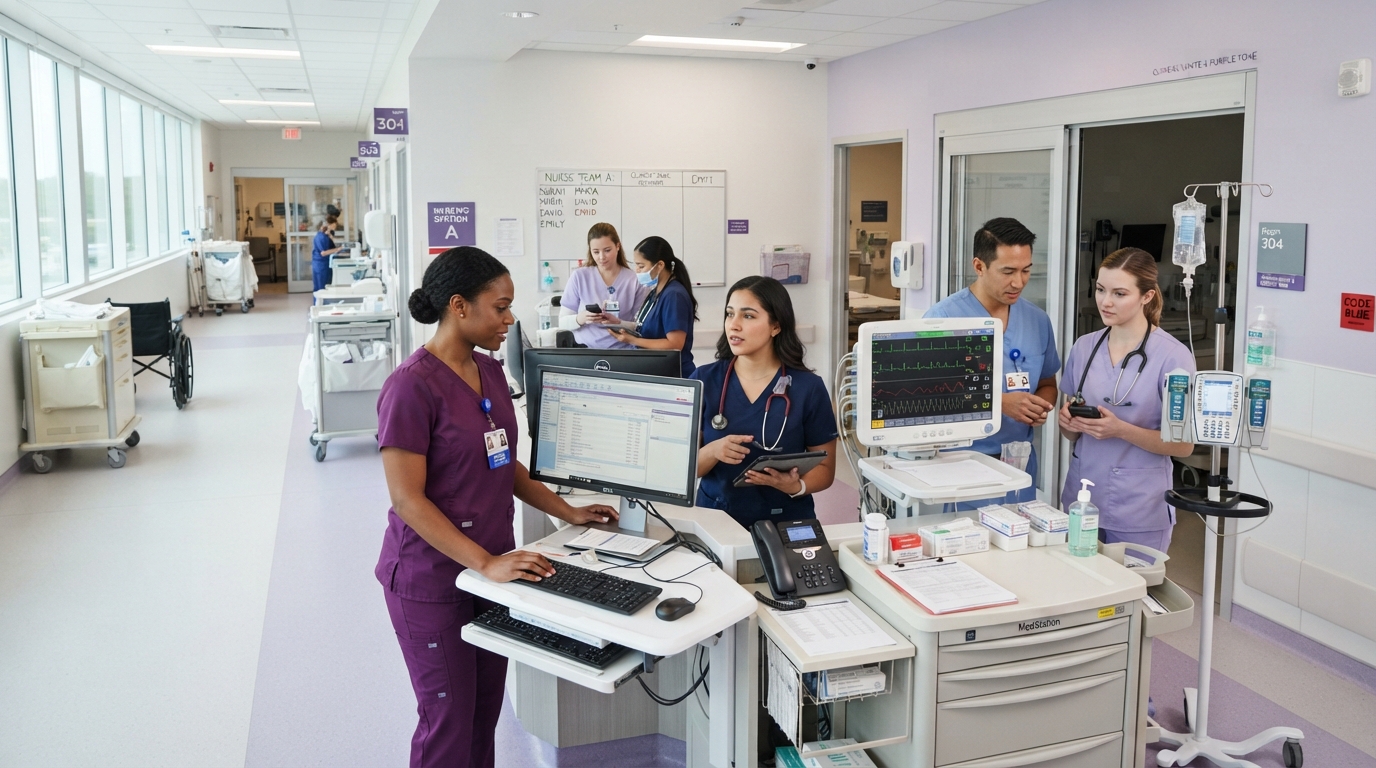
An observation unit is built around a fundamentally different model than a standard inpatient floor. The patients here are not admitted — they are under observation, which means the clinical question is usually narrow and time-bound. Is this chest pain a heart attack or reflux? Does this syncope warrant a pacemaker workup or can the patient go home? The unit is designed for rapid evaluation, quick decision-making, and discharge within 24 hours. For nurses, that means a fast turnover, constant admissions and discharges, and a workflow that prioritizes efficiency without sacrificing safety.
Nurse-to-Patient Ratio
Typically 1:4 to 1:5, but the turnover rate is far higher than a standard floor — multiple admissions and discharges per shift.
Note: Nurse-to-patient ratios are governed by individual state regulations or by the hospital's own staffing model — there is no single national standard. Some units also elect a team-based approach that incorporates LPNs/LVNs and CNAs to extend care delivery. The ratios and staffing model described here are illustrative and for demonstration only; actual assignments vary by facility, acuity, and location.
Key Credentials
What Is a Observation Unit?
An observation unit, sometimes called a clinical decision unit or short-stay unit, is a hospital floor that manages patients who need monitoring and diagnostic workup but do not meet criteria for inpatient admission. Patients typically stay under 24 hours, though some remain up to 48 hours while a clinical determination is made. The unit operates under observation status, a billing and regulatory designation distinct from inpatient admission, and it is designed to move patients through quickly — either to discharge or to formal admission if the workup reveals a condition requiring inpatient care.
The Patient Population
Patients presenting with symptoms that need a defined period of monitoring or testing to rule out a serious condition. The most common scenarios are chest pain rule-outs requiring serial cardiac enzymes and ECGs, syncope workups, mild to moderate asthma or COPD exacerbations that need a brief period of treatment, post-procedure observation after catheterization or infusion therapy, and patients awaiting inpatient bed placement. The population skews toward patients who are clinically stable but carry a risk that cannot be dismissed without observation.
The Nurse's Role
The observation unit RN manages a patient load that typically runs four to five patients, but the defining feature of the role is throughput. A nurse may admit three new patients and discharge three others within a single shift. The work centers on executing time-sensitive diagnostic protocols — serial troponin draws at prescribed intervals, repeat ECGs, continuous telemetry monitoring for chest pain patients, and structured reassessment to determine if the patient meets discharge or admission criteria. The nurse coordinates with the provider on disposition decisions, completes discharge education efficiently, and turns the bed over for the next arrival.
Skills Required
Rapid assessment and triage for time-sensitive rule-out protocols
Serial cardiac enzyme and ECG monitoring for chest pain patients
Efficient admission, discharge, and bed turnover workflows
Telemetry monitoring and rhythm recognition
Disposition decision support and provider collaboration
Patient education compressed into short-stay encounters
The Real Challenges
The observation unit is a throughput machine, and that creates a distinct kind of pressure. The nurse is constantly onboarding new patients — explaining the unit, initiating protocols, establishing IV access, drawing labs — while simultaneously managing patients who are mid-workup and discharging those who have been cleared. The documentation requirements under observation status are specific and time-sensitive, because billing depends on accurate status determination. And the clinical stakes are real: a chest pain patient who is being ruled out can develop a true cardiac event during the observation window, and the nurse has to be alert to that possibility even as they manage the throughput pressure.
Why This Unit Matters
Observation units exist to solve a problem that plagues every hospital: emergency department boarding and unnecessary inpatient admissions. By providing a structured environment for short-stay evaluation, the unit reduces ED crowding, avoids costly inpatient admissions for patients who do not need them, and captures revenue that would otherwise be lost. For the patient, it means a faster answer to a frightening symptom — chest pain, fainting, breathing trouble — without an overnight admission that may not be necessary. The unit is a model of efficient, protocol-driven care that depends heavily on nursing competence.
Frequently Asked Questions
What is an observation unit in a hospital?
An observation unit, also called a clinical decision unit or short-stay unit, manages patients who need monitoring and diagnostic workup but do not meet inpatient admission criteria. Patients typically stay under 24 hours while conditions like chest pain or syncope are evaluated and ruled out.
How is observation status different from inpatient admission?
Observation status is a regulatory and billing designation for patients who need hospital-level monitoring but do not meet the clinical criteria for inpatient admission. It is time-limited (typically under 24 hours) and billed differently. If the workup reveals a condition requiring ongoing care, the patient is converted to inpatient admission.
What do observation unit nurses do?
Observation unit nurses manage rapid-throughput care for short-stay patients — executing serial cardiac enzyme protocols, repeat ECGs, telemetry monitoring, and structured reassessment to determine if a patient can be discharged or needs admission. The role emphasizes efficiency, time-sensitive diagnostics, and frequent admissions and discharges.
Hiring for a Observation Unit?
We connect facilities with experienced floor nurses whose backgrounds align with observation unit staffing needs. Start a confidential conversation about your opening today.
The clinical information on this page is provided for general educational purposes only and reflects common practices across U.S. inpatient settings. It is not medical advice, a clinical standard, or a guarantee of any specific staffing model, patient outcome, or credentialing requirement. Nurse-to-patient ratios, scope of practice, required certifications, and unit protocols vary by facility, state law, and accrediting body. Medical Floor Recruiter is an independent recruitment facilitator that refers qualified candidates to client facilities; we do not employ, supervise, or direct the clinical care delivered by placed professionals. Final credentialing, licensure verification, and clinical competency determinations are the sole responsibility of the hiring facility.