Post-Surgical Unit
General post-operative recovery and complication monitoring
A post-surgical unit is the general recovery floor for patients who have undergone surgery and no longer need ICU-level care. Unlike a dedicated orthopedic or cardiac surgical unit, this floor manages a mix of surgical patients — abdominal surgery, vascular procedures, thoracic operations, and various specialty surgeries. The nursing work is built around surgical recovery pathways: monitoring for the complications that can follow any operation — bleeding, infection, ileus, thromboembolism — managing pain, advancing diet and activity, and moving patients toward discharge. The breadth of surgical cases means the nurse has to be fluent in multiple post-operative care protocols.
Nurse-to-Patient Ratio
Typically 1:4 to 1:5, with lower ratios for fresh post-op patients or those with complex drain and tube management.
Note: Nurse-to-patient ratios are governed by individual state regulations or by the hospital's own staffing model — there is no single national standard. Some units also elect a team-based approach that incorporates LPNs/LVNs and CNAs to extend care delivery. The ratios and staffing model described here are illustrative and for demonstration only; actual assignments vary by facility, acuity, and location.
Key Credentials
What Is a Post-Surgical Unit?
A post-surgical unit is an inpatient floor dedicated to the recovery of patients who have undergone general and specialty surgical procedures and no longer require intensive care. The unit manages post-operative care across multiple surgical service lines — general surgery (abdominal, colorectal, appendectomy, cholecystectomy), vascular surgery (bypass, endovascular procedures), thoracic surgery (lung resection, chest tube management), and various other specialties. The care follows enhanced recovery pathways that emphasize early mobilization, multimodal pain management, and the prevention of post-operative complications. The nursing requires versatility across multiple surgical recovery protocols.
The Patient Population
Adults recovering from a range of surgical procedures. Common patients include those recovering from abdominal surgery — bowel resection, hernia repair, appendectomy — vascular surgery patients recovering from bypass or endovascular procedures, thoracic surgery patients with chest tubes, patients recovering from various specialty surgeries, and those who have stepped down from the surgical ICU. The population varies widely in age and underlying health, from relatively healthy patients undergoing elective procedures to those with significant comorbidity recovering from emergent surgery.
The Nurse's Role
The post-surgical unit RN manages a patient load of four to five patients, with a focus on post-operative monitoring, pain management, and recovery progression. The role involves frequent assessment of surgical sites, drain and tube management — Jackson-Pratt drains, chest tubes, nasogastric tubes — pain management using multimodal protocols, advancing diet and activity per recovery pathways, and monitoring for post-operative complications. The nurse coordinates with surgical teams on recovery milestones, manages incisional care, prevents DVT through prophylaxis and mobilization, and educates patients on wound care, activity restrictions, and signs of complications to watch for at home.
Skills Required
Post-operative assessment across multiple surgical specialties
Drain, chest tube, and surgical tube management
Multimodal pain management for diverse surgical procedures
Early recognition of post-operative complications
Diet and activity advancement per recovery pathways
Wound care and incisional assessment
The Real Challenges
The breadth of surgical cases on a general post-surgical unit is both the appeal and the challenge. A nurse may care for a patient recovering from a bowel resection, another with a chest tube after lung surgery, and a third recovering from vascular bypass — each with different recovery protocols, different pain management needs, and different complication profiles. The nurse has to hold all of that in mind simultaneously, which requires strong organizational skills and clinical versatility. The unit also faces pressure to move patients through efficiently, as surgical pathways are designed for short stays, and any complication that extends the stay affects both the patient and the facility's metrics.
Why This Unit Matters
Post-surgical complications are a leading driver of extended hospital stays, readmissions, and patient harm. The quality of nursing on a post-surgical unit directly affects outcomes — early recognition of bleeding or infection, effective pain management that enables mobilization, and prevention of thromboembolic complications all reduce length of stay and improve recovery. The unit is also a key player in the hospital's surgical throughput, because efficient post-operative care frees up ICU beds and operating room capacity. For patients, the quality of their post-surgical nursing is often the difference between a smooth recovery and a complicated one.
Frequently Asked Questions
What is a post-surgical unit in a hospital?
A post-surgical unit is an inpatient floor dedicated to the recovery of patients who have undergone general and specialty surgical procedures and no longer need ICU care. It manages recovery across multiple surgical service lines, focusing on complication monitoring, pain management, drain and tube care, and early mobilization.
What complications do post-surgical nurses watch for?
Post-surgical nurses monitor for bleeding (drainage, hemoglobin drops, hemodynamic instability), surgical site infection (wound changes, fever), ileus (absence of bowel function, distension), deep vein thrombosis and pulmonary embolism, and respiratory complications like atelectasis and pneumonia. Early recognition is critical to preventing deterioration.
How does a post-surgical unit differ from a dedicated surgical specialty unit?
A general post-surgical unit manages recovery across multiple surgical specialties — abdominal, vascular, thoracic — requiring nurses fluent in diverse recovery protocols. A dedicated specialty unit (orthopedic, cardiac surgical) focuses on a single surgical type with specialized pathways. General post-surgical units are more common in smaller and mid-sized hospitals.
Hiring for a Post-Surgical Unit?
We connect facilities with experienced floor nurses whose backgrounds align with post-surgical unit staffing needs. Start a confidential conversation about your opening today.
The clinical information on this page is provided for general educational purposes only and reflects common practices across U.S. inpatient settings. It is not medical advice, a clinical standard, or a guarantee of any specific staffing model, patient outcome, or credentialing requirement. Nurse-to-patient ratios, scope of practice, required certifications, and unit protocols vary by facility, state law, and accrediting body. Medical Floor Recruiter is an independent recruitment facilitator that refers qualified candidates to client facilities; we do not employ, supervise, or direct the clinical care delivered by placed professionals. Final credentialing, licensure verification, and clinical competency determinations are the sole responsibility of the hiring facility.
Related Inpatient Units
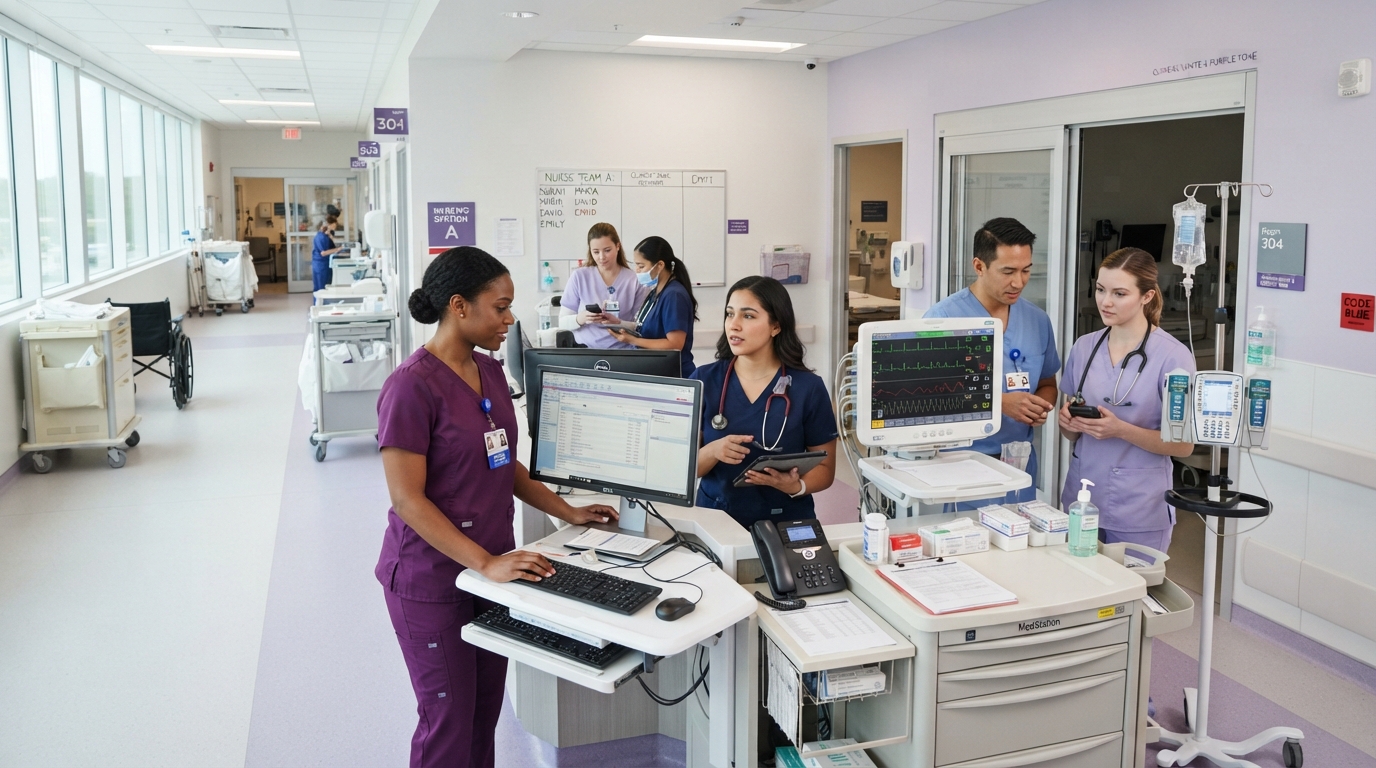
Orthopedics Unit
Orthopedic inpatient units managing post-operative recovery from joint replacements, fracture repairs, and spinal surgeries — pain control, mobility, and DVT prevention.
Neurosurgery Unit
Neurosurgery inpatient units managing recovery from craniotomies, spinal surgeries, and neurosurgical interventions — frequent neuro checks, ICP monitoring, and complication vigilance.
Transplant Unit
Transplant inpatient units managing post-operative recovery from kidney, liver, heart, and lung transplantation — immunosuppression, rejection monitoring, and infection prevention.