
Long-Term Acute Care Hospital (LTACH)
Extended acute care for the medically complex patient
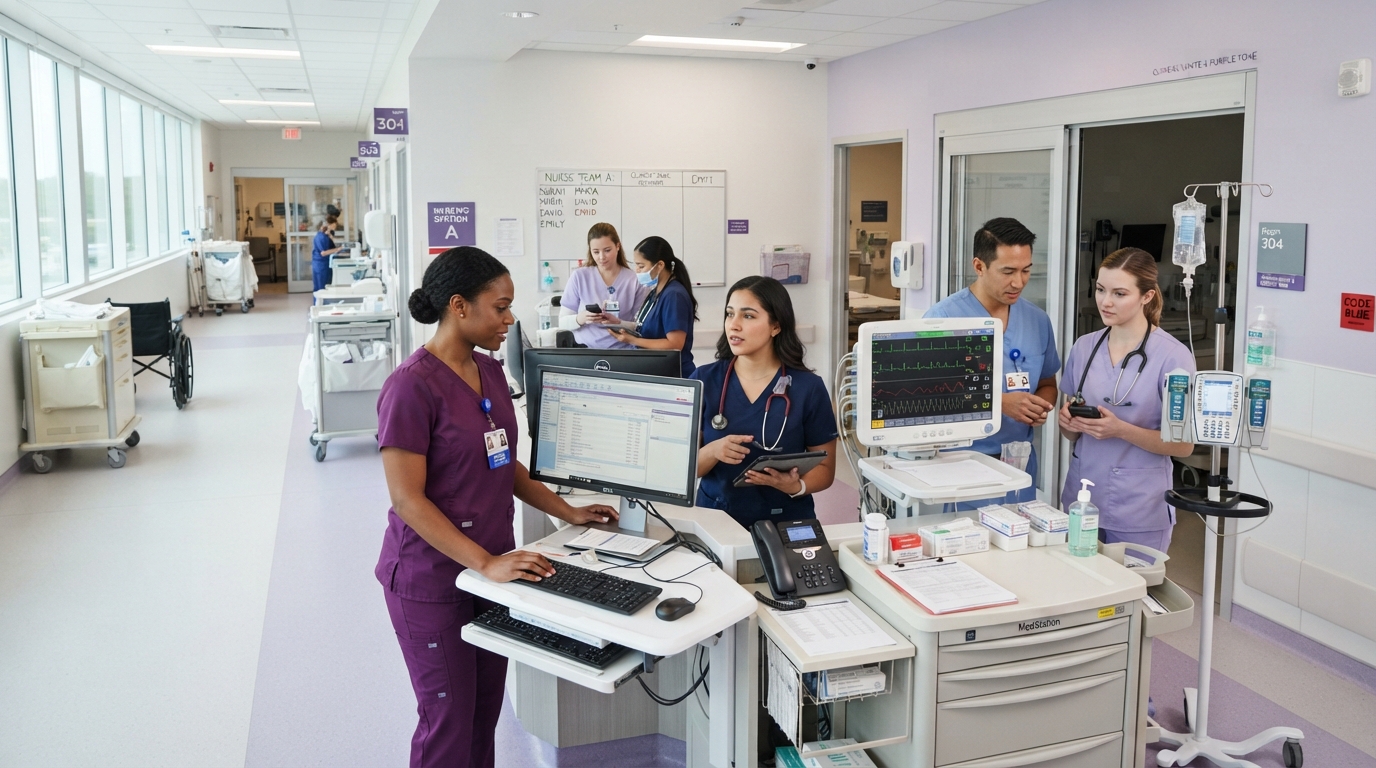
A Long-Term Acute Care Hospital, or LTACH, is a distinct type of facility — not a unit within a hospital, but a standalone hospital licensed for extended acute care. The patients here are medically complex and have exhausted their acute care stay at a traditional hospital but are not yet stable enough for a skilled nursing facility or rehabilitation unit. Many are ventilator-dependent and working toward weaning, others have complex wounds that require weeks of treatment, and some are recovering from catastrophic illness or injury that needs prolonged acute-level care. The nursing is intense, specialized, and built around the reality that recovery here is measured in weeks and months, not days.
Nurse-to-Patient Ratio
Typically 1:4 to 1:5 on LTACH medical floors, 1:2 in LTACH ICU settings, reflecting the acuity and complexity of the population.
Note: Nurse-to-patient ratios are governed by individual state regulations or by the hospital's own staffing model — there is no single national standard. Some units also elect a team-based approach that incorporates LPNs/LVNs and CNAs to extend care delivery. The ratios and staffing model described here are illustrative and for demonstration only; actual assignments vary by facility, acuity, and location.
Key Credentials
What Is a Long-Term Acute Care Hospital (LTACH)?
A Long-Term Acute Care Hospital (LTACH) is a standalone acute care hospital licensed and certified to provide extended, hospital-level care to patients with complex medical needs who require a longer stay than a traditional acute care hospital can provide. LTACHs are distinct from skilled nursing facilities and rehabilitation units — they provide acute-level care, including ICU-level services, over an average length of stay of 25 days or more. The patients typically transfer from a traditional hospital's ICU or medical-surgical floor when they are medically stable enough to leave acute care but still require ongoing hospital-level treatment. LTACHs are regulated under the same Conditions of Participation as acute care hospitals and are subject to CMS long-term care hospital payment systems.
The Patient Population
Medically complex adults who require extended acute-level care. The most common patient groups are ventilator-dependent patients working toward weaning — often after prolonged respiratory failure, ARDS, or catastrophic illness — patients with complex wounds requiring prolonged treatment (large pressure ulcers, surgical wounds, burns), those recovering from multi-system organ failure, patients with severe neurological injury like traumatic brain injury or post-anoxic encephalopathy, and those with complex medical needs like ongoing IV antibiotic therapy for osteomyelitis or endocarditis. The population is characterized by medical complexity, multiple comorbidities, and the need for prolonged, intensive treatment.
The Nurse's Role
The LTACH RN manages a patient load that varies by acuity — typically four to five patients on a medical floor and two on an LTACH ICU — with a focus on prolonged, complex care. The role involves ventilator management and weaning protocols, complex wound care that may include negative pressure wound therapy and specialized dressings, management of multiple IV therapies including long-term antibiotics and parenteral nutrition, tracheostomy care, and the coordination of a prolonged recovery process. The nurse manages patients through weeks of care, which allows for deeper assessment of trends and progress than is possible in a short-stay hospital. The role also involves significant patient and family education, as the prolonged stay and complex recovery require families to understand the trajectory and participate in discharge planning.
Skills Required
Ventilator management and weaning protocol execution
Complex wound care including negative pressure wound therapy
Long-term IV therapy and parenteral nutrition management
Tracheostomy care and management
Management of medically complex patients over extended stays
Family education and prolonged discharge planning
The Real Challenges
LTACH nursing is demanding because the patients are among the most medically complex in the healthcare system. A single patient may be ventilator-dependent, have a stage IV pressure ulcer, require multiple IV antibiotics, and have a tracheostomy — all simultaneously. The nurse has to manage all of that with competence and organization. The prolonged length of stay creates a different kind of relationship with patients and families — the nurse may care for the same patient for weeks, which is rewarding but also emotionally demanding when recovery is slow or complications arise. The patient population also carries high mortality and morbidity, and the nurse has to navigate the reality that not every patient will recover, even with extended care.
Why This Unit Matters
LTACHs serve a patient population that has no other appropriate care setting — they are too acute for a skilled nursing facility but have exhausted their stay in a traditional hospital. Without LTACHs, these patients would either remain in acute care hospitals (occupying beds needed for new admissions) or be discharged to settings that cannot safely care for them. The quality of nursing in an LTACH directly affects outcomes that matter deeply: whether a ventilator-dependent patient can be weaned, whether a complex wound heals, whether a medically complex patient can eventually return to the community. The work is demanding, but it serves a population that is among the most vulnerable in the healthcare system, and the care provided here is both clinically complex and deeply human.
Frequently Asked Questions
What is a Long-Term Acute Care Hospital (LTACH)?
A Long-Term Acute Care Hospital (LTACH) is a standalone acute care hospital licensed to provide extended, hospital-level care to medically complex patients who require a longer stay than a traditional hospital can provide. LTACHs are distinct from skilled nursing facilities — they provide acute-level care, including ICU services, over an average stay of 25 days or more.
How is an LTACH different from a skilled nursing facility?
An LTACH is a licensed acute care hospital that provides hospital-level care, including ICU services, physician daily oversight, and complex treatments like ventilator management. A skilled nursing facility provides a lower level of care focused on rehabilitation and custodial support. LTACH patients are too acute for a nursing facility but have exhausted their traditional hospital stay.
What kind of patients are treated in an LTACH?
LTACH patients are medically complex adults who require extended acute care — ventilator-dependent patients working toward weaning, those with complex wounds requiring prolonged treatment, patients recovering from multi-system organ failure, those with severe neurological injury, and patients needing long-term IV antibiotic therapy. The average stay is 25 days or more.
Hiring for a LTACH Unit?
We connect facilities with experienced floor nurses whose backgrounds align with long-term acute care hospital (ltach) staffing needs. Start a confidential conversation about your opening today.
The clinical information on this page is provided for general educational purposes only and reflects common practices across U.S. inpatient settings. It is not medical advice, a clinical standard, or a guarantee of any specific staffing model, patient outcome, or credentialing requirement. Nurse-to-patient ratios, scope of practice, required certifications, and unit protocols vary by facility, state law, and accrediting body. Medical Floor Recruiter is an independent recruitment facilitator that refers qualified candidates to client facilities; we do not employ, supervise, or direct the clinical care delivered by placed professionals. Final credentialing, licensure verification, and clinical competency determinations are the sole responsibility of the hiring facility.
Related Inpatient Units
Inpatient Psychiatric / Behavioral Health Unit
Inpatient psychiatric units managing acute mental health crises — suicidal ideation, psychotic episodes, severe depression, and behavioral emergencies — in a safe, structured environment.
Detox Unit
Detoxification units managing medically supervised withdrawal from alcohol, opioids, and other substances — symptom management, medication-assisted treatment, and stabilization.
Acute Inpatient Rehabilitation Unit
Acute inpatient rehabilitation units providing intensive physical, occupational, and speech therapy for patients recovering from stroke, surgery, trauma, and debilitating illness.